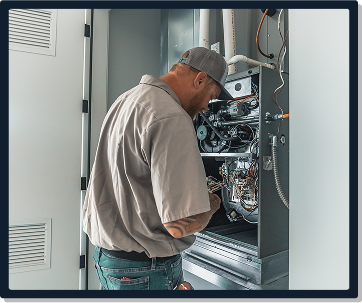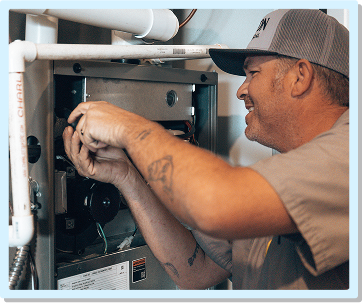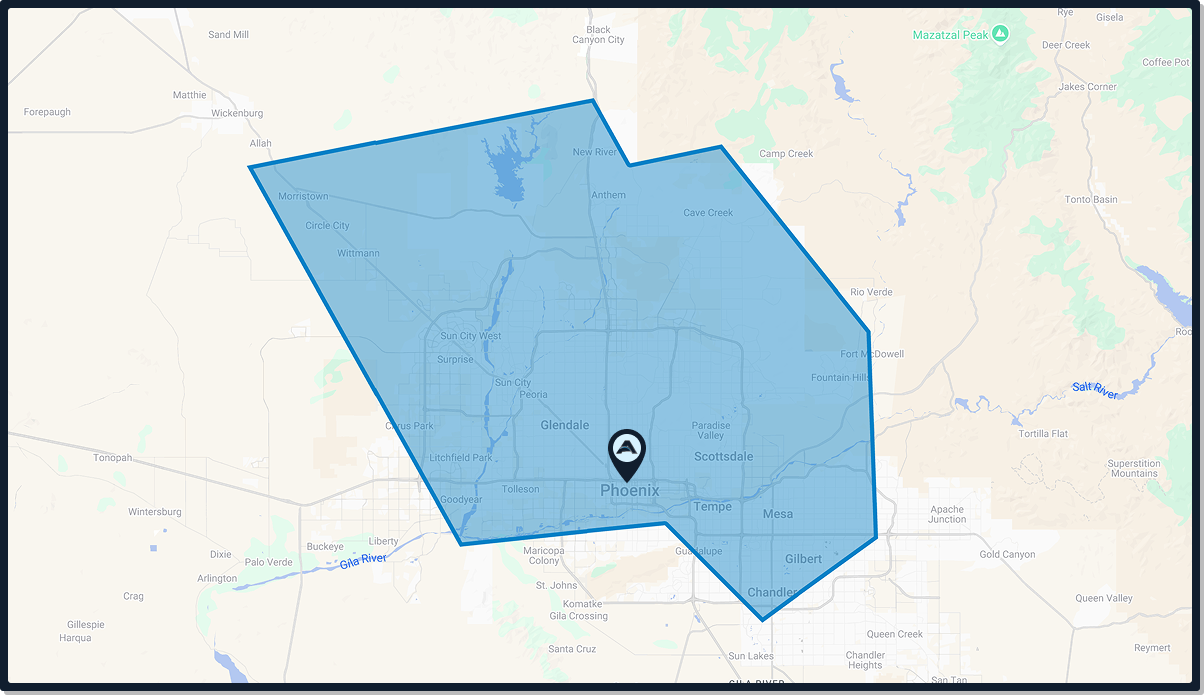


When your furnace stops producing heat or starts behaving erratically, you need a technician who understands the specific demands that Arizona’s desert climate places on gas and electric furnaces. Action Mechanical Services provides expert furnace repair throughout Phoenix, diagnosing the root cause of the problem and restoring reliable heat to your home.
Gas furnaces are the backbone of residential heating in the Phoenix metropolitan area. Nearly every home in Phoenix built with central heating relies on a gas furnace as the primary heat source. These systems are designed to last 15 to 20 years, but Arizona’s unique conditions — months of inactivity during summer, extreme temperature cycling, and pervasive desert dust — create failure patterns that differ from what furnaces experience in other parts of the country.
How We Diagnose Furnace Problems
Furnace diagnostics require a systematic approach. Our technicians do not guess or replace parts at random. Every furnace repair call follows a structured process that starts with the simplest possible causes and works toward more complex issues:
- Thermostat verification — We confirm the thermostat is set to heat mode, the temperature setpoint is above ambient room temperature, and the thermostat is communicating with the furnace. Wiring problems, dead batteries, and misconfigured settings account for a surprising number of no-heat calls.
- Power and gas supply check — We verify the furnace has power, the gas valve is open, and gas pressure at the furnace meets manufacturer specifications. We also check the furnace door safety switch, which prevents the system from running when the access panel is not properly seated.
- Ignition system inspection — Modern furnaces use hot surface igniters or direct spark ignition. We test igniter resistance, inspect spark electrodes, and verify the flame sensor is reading the burner flame correctly. Cracked igniters and dirty flame sensors are among the most common furnace failures in Phoenix homes.
- Gas valve and burner assembly — We inspect burner flames for proper color, shape, and stability. We check the gas valve solenoid operation and look for signs of delayed ignition, which indicates dirty burners or gas pressure issues.
- Heat exchanger inspection — Using visual inspection and combustion analysis, we check for cracks, corrosion, or separation in the heat exchanger. A compromised heat exchanger can leak carbon monoxide into your living space and is the most critical safety component in any gas furnace.
- Blower motor and airflow — We test the blower motor capacitor, measure amp draw, and check airflow through the supply and return duct system. Restricted airflow causes the furnace to overheat and shut down on the high-limit safety switch.
- Safety controls — We test the high-limit switch, pressure switch, and rollout switches to ensure all safety devices are functioning properly.
Common Furnace Failures in Phoenix Homes
Many homes in the area were built over 30 years ago, meaning original HVAC equipment is well past its expected lifespan. The desert environment creates specific wear patterns on furnace components:
- Cracked hot surface igniters — Silicon carbide and silicon nitride igniters become brittle over time. In Arizona, the long off-season means thermal shock when the furnace fires up after months of dormancy can crack an aging igniter on the first cold night of the season.
- Dirty flame sensors — The flame sensor is a small metal rod that verifies the burner is lit. Oxidation and carbon buildup cause the sensor to fail, shutting the furnace down within seconds of ignition. Cleaning or replacing the flame sensor is a fast, inexpensive repair.
- Clogged burners — Desert dust, spider webs, and insect nests accumulate inside the burner compartment during the months the furnace sits idle. These obstructions cause delayed ignition, uneven flames, and elevated carbon monoxide production.
- Failed blower motor capacitors — Arizona heat degrades capacitors in every part of your HVAC system, including the furnace blower. A failed run capacitor causes the blower motor to hum but not spin, meaning no heat reaches your living space even though the burners are firing.
- Pressure switch failures — The pressure switch verifies that the draft inducer motor is pulling combustion gases safely out of the heat exchanger. A failed pressure switch or a crack in the condensate drain line can prevent the furnace from igniting at all.
Furnace acting up? Call 480-450-7283 for same-day furnace diagnostics in Phoenix.