

Commercial HVAC in Phoenix AZ differs from residential systems in three major ways: scale, complexity, and cost. A typical commercial rooftop unit serves 10 to 50 times the square footage of a home system, runs longer hours, and demands preventive maintenance contracts that range from $2,400 to $7,200 annually for small businesses. Meanwhile, emergency repairs can cost 30 to 50 percent more than residential calls because parts are larger, specialty technicians are required, and downtime hits your revenue stream immediately. Business owners should budget 15 to 20 cents per square foot annually for planned maintenance, plus a reserve fund equal to 10 percent of replacement cost for unexpected repairs.
Residential vs. Commercial HVAC Systems: Key Differences
Commercial rooftop units handle cooling and heating loads far beyond what residential split systems encounter. A Phoenix office building or retail space often uses packaged rooftop units rated between 5 and 25 tons per unit, compared to the 2 to 5 ton condensers you find outside homes. Because commercial buildings rarely stop operating, these systems log 12 to 18 hours per day during summer instead of the 8 to 10 hours typical in residential use.
Zoning complexity separates commercial from residential work. A 5,000-square-foot restaurant near Desert Ridge Marketplace might need three separate zones—dining room, kitchen, and bar—each controlled by its own thermostat and damper network. Residential systems usually serve one or two zones at most. This complexity means commercial repairs require technicians who understand variable air volume boxes, economizers, and multi-stage compressors.
Component size and power requirements also differ. Commercial condensers and air handlers weigh hundreds of pounds and require cranes or rooftop access for replacement. Electrical service runs on 208- or 480-volt three-phase power instead of the 240-volt single-phase circuits that feed residential units. As a result, commercial parts cost more and take longer to source because suppliers stock fewer units locally.
Downtime Costs: Why Commercial AC Failure Hits Your Bottom Line Fast
A restaurant in Scottsdale or downtown Phoenix loses approximately $500 to $1,200 per hour when air conditioning fails during lunch or dinner service. Customers leave, online reviews drop, and health inspectors can shut you down if kitchen temperatures exceed safe food-handling thresholds. Retail stores face similar pressure because shoppers spend 20 to 30 percent less time browsing in uncomfortable heat, directly cutting sales.
Office tenants may invoke lease clauses if temperatures exceed 78 degrees for extended periods. Property managers face liability, lost rent, and tenant turnover. Medical clinics and urgent care centers cannot operate safely without climate control for patients and temperature-sensitive medications. Even a four-hour outage can cost a small business owner thousands in lost revenue and reputation damage.
Preventive maintenance costs less than emergency breakdowns in every measurable way. An annual commercial maintenance plan averages $200 to $600 per visit for quarterly inspections, while a mid-July compressor failure can run $4,000 to $8,000 in parts, labor, and after-hours premiums. Regular filter changes, refrigerant checks, and belt inspections catch small problems before they cascade into system shutdowns during your busiest hours.
Commercial HVAC Maintenance Plans in Phoenix AZ: Budgeting for Reliability
A small commercial HVAC system serving 3,000 to 7,000 square feet typically costs $2,400 to $4,800 per year under a quarterly maintenance agreement. Mid-sized buildings with multiple rooftop units can expect $6,000 to $12,000 annually. These contracts include filter replacement, refrigerant level checks, condenser coil cleaning, thermostat calibration, electrical connection tightening, and belt or motor inspections.
Most Phoenix commercial maintenance agreements also cover priority scheduling and discounted labor rates for repairs discovered during inspections. For example, if a technician finds worn contactors or a failing capacitor in April, you pay parts cost plus a reduced service fee instead of waiting for a July failure that triggers emergency rates. This approach smooths your cash flow and prevents surprise invoices during peak season.
Quarterly visits align with Phoenix’s extreme seasonal swings. Technicians focus on cooling readiness in March and April, peak-load performance checks in June and September, and heating-system prep in November. Because commercial systems endure longer run times than residential units, skipping even one quarterly check doubles the risk of mid-season breakdowns. According to the U.S. Department of Energy, planned maintenance extends equipment life by 30 to 50 percent and reduces energy costs by 10 to 20 percent annually.
What a Commercial Maintenance Agreement Typically Includes
- Filter inspection and replacement every 30 to 90 days depending on building use
- Refrigerant charge verification and leak detection
- Condenser and evaporator coil cleaning to maintain efficiency
- Thermostat and control system calibration
- Electrical connection inspection and tightening to prevent arcing
- Belt tension checks and lubrication on blower motors
- Drain line flushing to prevent overflow and water damage
- Compressor amp draw and run-time logging to predict failures
Code Compliance and Inspections for Commercial HVAC
Arizona enforces the International Mechanical Code and the International Energy Conservation Code for all commercial HVAC installations. These regulations govern duct sizing, ventilation rates, refrigerant handling, and energy efficiency minimums. Cities within Maricopa County—including Phoenix, Scottsdale, Tempe, and Mesa—add local amendments covering rooftop unit placement, electrical disconnects, and seismic restraints.
Restaurants, medical offices, and any business handling food or patients face additional scrutiny. Maricopa County Environmental Services requires minimum ventilation rates and temperature controls that meet health department standards. For instance, commercial kitchens must maintain exhaust hood airflow sufficient to capture cooking vapors, and HVAC systems cannot recirculate air between kitchen and dining zones without proper filtration.
Building inspectors verify proper permitting during new installations or major replacements. A permit ensures the contractor pulled load calculations, selected appropriately sized equipment, and installed refrigerant lines and electrical service to code. Operating without permits can void manufacturer warranties, trigger fines during resale inspections, and increase liability if a system failure causes property damage or injury.
Annual inspections by certified HVAC technicians help you stay compliant between major overhauls. Inspectors document refrigerant levels, verify backflow prevention on condensate drains, and confirm that rooftop units remain securely anchored. These records prove due diligence if a health inspector or insurance adjuster asks for maintenance history.
Emergency Support for Commercial Systems: Nights, Weekends, Holidays
Commercial HVAC emergencies rarely wait for business hours. A compressor can fail at 9 p.m. on a Friday, a belt can snap on Sunday morning, or a control board can burn out during a holiday weekend. Businesses need service providers who answer calls after hours and dispatch technicians quickly enough to minimize revenue loss.
Most Phoenix commercial HVAC contractors offer 24/7 emergency dispatch with response-time guarantees between one and four hours depending on the service tier. Priority agreements place commercial customers at the front of the queue, ahead of routine residential calls. However, after-hours labor rates typically run 50 to 100 percent higher than daytime service, and parts surcharges apply if suppliers must open their warehouses outside normal hours.
Smart business owners weigh the cost of premium emergency contracts against their downtime risk. A Tempe retail shop that closes at 6 p.m. and remains cool overnight might accept slower weekend response to save on monthly fees. Conversely, a 24-hour convenience store or urgent care clinic cannot tolerate four-hour waits and should invest in guaranteed one-hour response with dedicated backup technicians.
Some commercial service agreements include loaner equipment or temporary cooling solutions while parts are ordered. For example, if a rooftop compressor fails and the replacement requires two days to ship from a regional warehouse, the contractor might stage portable AC units to keep critical zones operational. This level of support costs more upfront but prevents total business shutdowns during parts delays.
Questions to Ask Before Signing an Emergency Service Agreement
- What is the guaranteed maximum response time for after-hours calls?
- Do commercial customers receive priority over residential service requests?
- Are after-hours labor rates capped, or do they escalate on holidays?
- Does the agreement include temporary cooling solutions if repairs take multiple days?
- How many technicians are on call simultaneously to handle overlapping emergencies?
Phoenix business owners also benefit from contractors who stock common commercial parts locally. Capacitors, contactors, and blower motors for popular Carrier, Trane, and Lennox rooftop units should be available same-day instead of waiting for freight from California or Texas. Ask prospective HVAC partners about their parts inventory and supplier relationships before committing to a long-term contract.
Planning Your Commercial HVAC Budget
A realistic commercial HVAC budget includes three line items: planned maintenance, repair reserves, and eventual replacement. Planned maintenance runs 15 to 20 cents per square foot annually. A 5,000-square-foot office therefore budgets $750 to $1,000 per year for quarterly service visits. Repair reserves should equal 10 percent of system replacement cost, set aside for unexpected failures between scheduled maintenance.
Replacement planning depends on equipment age and condition. Commercial rooftop units last 12 to 18 years in Phoenix’s climate, shorter than the 15 to 20 years achievable in milder regions. If your system is over 10 years old, start allocating funds toward replacement. A complete 10-ton rooftop unit costs $8,000 to $15,000 installed, while a 25-ton unit can reach $20,000 to $35,000 depending on efficiency ratings and controls.
Energy costs also factor into total ownership. An aging, inefficient system might consume 20 to 40 percent more electricity than a modern high-efficiency model. For businesses with large cooling loads, upgrading from a 10 SEER unit to a 14 SEER unit can save $1,500 to $3,000 per year in electricity bills, paying back the installation premium within five to seven years.
Finally, consider financing options for major repairs or replacements. Many commercial HVAC contractors partner with lenders who offer equipment financing at competitive rates. Spreading a $15,000 rooftop unit replacement over 36 or 60 months preserves cash flow and allows you to budget predictable monthly payments instead of absorbing a one-time capital expense. Action Mechanical offers flexible financing solutions tailored to Phoenix business owners.
Why Local Expertise Matters for Commercial HVAC in Phoenix
Phoenix’s summer heat and low humidity create unique challenges for commercial HVAC systems. Rooftop units bake under 120-degree surface temperatures, accelerating wear on compressors and fans. Dust storms coat condenser coils, choking airflow and forcing systems to work harder. Monsoon rains test drain pans and rooftop curb seals, risking water intrusion into ceilings and electrical panels.
Contractors familiar with Arizona’s climate know to upsize condensate drains, specify UV-resistant wiring insulation, and recommend coil coatings that resist dust buildup. They also understand local permitting quirks in Phoenix, Scottsdale, and surrounding municipalities. A technician who primarily works in Tucson or Flagstaff may miss details that matter in the Valley’s urban heat island.
Relationships with local suppliers also speed repairs. When a blower motor fails on a Saturday afternoon, a Phoenix-based contractor can pull inventory from a nearby warehouse instead of waiting until Monday for a shipment. This access cuts downtime from days to hours, directly protecting your revenue and customer satisfaction.
Action Mechanical has served Phoenix-area businesses for years, building expertise in the rooftop units, packaged systems, and split configurations common in our market. Our technicians understand the demands of restaurant kitchens in downtown Phoenix, retail spaces in Scottsdale Fashion Square, and medical offices throughout the East Valley.
Take Control of Your Commercial HVAC Costs
Commercial HVAC reliability starts with a proactive maintenance plan, realistic budgeting, and a contractor who understands Phoenix’s unique climate challenges. Downtime costs real money, but emergency breakdowns are preventable when you invest in quarterly inspections and address small issues before they escalate. Whether you operate a restaurant, retail store, office building, or medical clinic, your HVAC system directly affects customer comfort, employee productivity, and regulatory compliance.
Action Mechanical provides comprehensive commercial HVAC service throughout Phoenix and the surrounding area, from preventive maintenance agreements to emergency repairs and full system replacements. Contact us today at www.actionmechanicalservice.com to schedule an inspection and protect your business from costly downtime.
Frequently Asked Questions
How much does commercial HVAC maintenance cost in Phoenix?
Small commercial systems serving 3,000 to 7,000 square feet typically cost $2,400 to $4,800 per year for quarterly maintenance agreements. Larger buildings with multiple rooftop units can expect $6,000 to $12,000 annually. These plans include filter changes, refrigerant checks, coil cleaning, and priority scheduling for repairs.
What is the difference between commercial and residential HVAC systems?
Commercial systems are larger, more complex, and run longer hours. A commercial rooftop unit handles 5 to 25 tons of capacity compared to 2 to 5 tons for residential split systems. Commercial buildings often require multiple zones, three-phase power, and specialty technicians trained on packaged rooftop equipment.
How long does a commercial HVAC unit last in Phoenix?
Commercial rooftop units last 12 to 18 years in Phoenix's climate, which is shorter than the 15 to 20 years achievable in milder regions. Extreme heat, dust storms, and long run times accelerate wear. Regular quarterly maintenance extends equipment life and reduces the risk of mid-season failures.
Do commercial HVAC contractors offer after-hours emergency service?
Yes, most Phoenix commercial HVAC contractors offer 24/7 emergency dispatch with response-time guarantees between one and four hours. Commercial customers with priority agreements receive faster service than routine residential calls. However, after-hours labor rates typically run 50 to 100 percent higher than daytime service.
What permits are required for commercial HVAC installation in Phoenix?
Arizona enforces the International Mechanical Code and International Energy Conservation Code for commercial HVAC work. Cities in Maricopa County require permits for new installations and major replacements to verify load calculations, equipment sizing, and code-compliant electrical service. Operating without permits can void warranties and trigger fines during inspections.
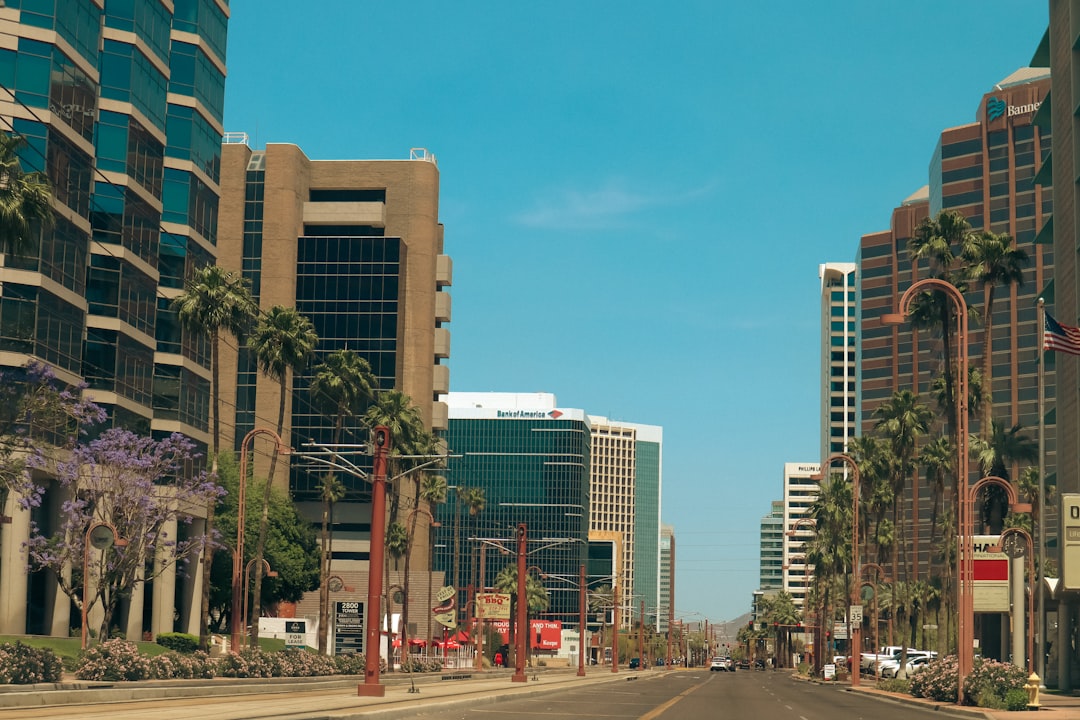
Photo by Allison Astorga on Unsplash via Allison Astorga.